Merry Meet and Welcome!

Merry Meet and Welcome!

We hope that you will find our content to be uplifting and educational. Please keep in mind that this is not a space for debate or criticism but rather a place for respect, curiosity and learning.

You are encouraged to take what you can from what we share here. If you want to know more, do not look to the contributors of this blog to teach anything beyond what we post. Seek out what feels right for you, trust the Spirit to guide you and have faith in our heavenly parents who are the givers of all pure knowledge.
Showing posts with label Drawing Inspiration. Show all posts

December 27, 2012

Finding An Accord on Christmas

Its no secret that I was more Pagan than Christian before becoming Mormon, and it was only via the complimentary encompassing of Paganism and Christianity into one traditiom that led me to renouce the faith of my youth and to become converted. One minor detail of Mormon theology that I especially appreciated was the acceptance of the fact that Mormons known that Christ was not born on December 25th.

On Christmas Eve as a teenager, I recall listening to the UU service celebrating the manger scene. It was a stark contrast to a few minutes before when the reverend mentioned the historical evidence that Christ was born at another time of the year and that placing the observance of Christ's birth on December 25th was a purposeful and malicious attempt to trick heathens to convert to Christianity. Of all denominations, the Unitarians ought to have known better than to perpetuate an injustice that occurred centuries ago and brush aside the injustice that is perpetuated by overlooking it. It was with disappointment but not much surprise to see that Mormons do the same; however I can accept their desire to attempt to fit in with other Christian denominations.

And yet, this frustration stayed with me each and every year--my sadness at the injustices experienced by my ancestors in the name of religion and the difficulty of distancing myself from the cultural traditions taking place around me. I wasn't even sure if that was what I wanted. So it was, that the last few years, I have experimented with different ways of observing the season. This year, I think I have found a blend of traditions that strikes a balance and brings light and merriment to the dark and cold of the season in a way that I can feel at peace with morally and spiritually.

Historically, the celebration on the Winter Solstice was to bring light to the darkness, and celebrate the signs that the depths of winter would not persist evermore. Fires, evergreen trees, singing, dancing, feasting all bring merriment and activity to a time that can be very bleak and depressing for those in more northern areas. American Christmas traditions do well at these activities and make it easy for the entire month of December to be a time of good cheer. Adding traditions from other cultures creates a number if Holy-Days to bring spirituality and mirth to the season.
Our St. Nikolaustag Celebration

This year, the Descent family added Hanukkah (with a celebration of all the LDS temples that had been dedicated this year), Advent on each Sunday preceding the 25th and St. Nikolaustag (complete with new boots for the children that were filled with chocolate and switches) to the typical celebrations of Yule and Christmas. Next year, we will likely include Santa Lucia Day, the traditional Swedish holy day and Twelfth Night for a complete month of candle lit feasts, fires in the fireplace and reminders to seek joy and gladness in the dark periods of life.

The common thread that I am finding between the nature based celebrations, the cultural traditions and the religious Christian observances is that all are intended to celebrate light in the darkness. When Christ is viewed as the light and the life of the world, and his whole life is honored and celebrated, rather than placing all the emphasis on his birth, I find December and early January the perfect time to celebrate the role he plays in the lives of all people ever upon the earth. In teaching about Christmas to our children, we emphasis the Christlike loving and care shown by Santa Claus, and how he was a religious man who wanted to spread joy to those who were underprivileged. We emphasize his example of showing love for the children and gift donations in the children's honor to Heifer International, and the local Food Bank.

As I reflect on my need to find hope and light in the darkness, my heart is turned to those who do not have the shelter and protect that I enjoy from the elements at this time of year. Winter creates a more intense need in the lives of the homeless and undernourished as money for food might go towards heating bills at this time of year.

With the focus on Christ's life and the shared symbols of light and everlasting life, Christmas works as a Christian Holiday for me and I am able to put to peace my objections through blending traditions, while giving respect and obeisance to the injustice experienced by ancient pagans.

A Christmas tradition adopted from my husband's family is the reading the Luke 2 on Christmas Eve in the languages spoken by those in the house. For us that is English, German and Spanish so each night preceding Christmas Eve, the chapter is read in a different language at the time we typically read scriptures before going to bed. For the night of Christmas, I wanted to compile a list of scriptures that encompassed Christ's mission to the earth and the outcomes of his sacrifice. Our Christmas Night devotional included the following:

Isaiah 9: 6-7
"For unto us a child is born, unto us a son is given; and the government shall be upon his shoulder; and his name shall be called Wonderful, Counselor, The Mighty God, The Everlasting Father, The Price of Peace. Of the increase of government and peace there is no end, upon the throne of David, and upon his kingdom to order it, and to establish it with judgement and with justice from henceforth, even forever. The zeal of the Lord of Host will preform this."

Isaiah 53
Who hath believed our report? and to whom is the arm of the Lord revealed? For he shall grow up before him as a tender plant, and as a root out of a dry ground: he hath no form nor comeliness; and when we shall see him, there is no beauty that we should desire him. He is despised and rejected of men; a man of sorrows, and acquainted with grief: and we hid as it were our faces from him; he was despised, and we esteemed him not. Surely he hath borne our griefs, and carried our sorrows: yet we did esteem him stricken, smitten of God , and afflicted. But he was wounded for our transgressions, he was bruised for our iniquities: the chastisement of our peace was upon him; and with his stripes we are healed. All we like sheep have gone astray; we have turned every one to his own way; and the Lord hath laid on him the iniquity of us all. He was oppressed, and he was afflicted, yet he opened not his mouth: he is brought as a lamb to the slaughter, and as a sheep before her shearers is dumb, so he openeth not his mouth. He was taken from prison and from judgment:and who shall declare his generation? for he was cut off out of the land of the living: for the transgression of my people was he stricken. And he made his grave with the wicked, and with the rich in his death: because he had done no violence, neither was any deceit in his mouth. But it pleased the Lord to bruise him; he hath put him to grief: when thou shalt make his soul an offering for sin, he shall see his seed, he shall prolong his days, and the pleasure of the Lord shall prosper in the the land. He shall see the travail of his soul, and shall be satisfied: by his knowledge shall my righteous servant justify many; for he shall bear their iniquities. Therefore will I divide him a portion with the great, and he shall divide the spoil with the strong; because he hath poured out his soul unto death: and he was numbered with the transgressors; and he bare the sin of many, and made intercession for the transgressors."

Mosiah 15: 1, 5-9, 18-23
And now Abindai said unto them: I would that ye should understand that God himself shall come down among the children of men, and shall redeem his people.

And thus the flesh becoming subject to the Spirit, or the Son to the Father, being on God, suffereth temptation, and yeildeth not to the temptation, but suffereth himself to be be mocked, and scourged, and cast out and disowned by his people. And after all this, after working mighty miracles among the children of men, he shall be led, yea, even as Isaiah said, as a sheep before the shearer is dumb, so he opened not his mouth. Yes, even so he shall be lef, crucified, and slain, the flesh becoming subject even unto death, the will of the Son being swallowed up in the will of the Father. And thus God breaketh the bands of death, gained victory over death; giving the Son power to make intercession for the children of men-- Having ascended into heaven, having the bowels of mercy; being filled with compassion towards the children of men; standing betwixt them and justice; having broken the bands of death, taken upon himself their iniquity and their transgressions, having redeemed them, and satisfied the demands of justice.

And behold, I say unto you, this is not all. For O how beautiful upon the mountains are the feet of him that bringeth good tidings that is the founder of peace, yea, even the Lord, who has redeemed his people; yea, him who has granted salvation unto his people. For were it not for the redemption which he hath made for his people, which was prepared from the foundation of the world, I say unto you were it not for his, all mankind must have perished."

2 Nephi 9
"O how great the goodness of our God, who prepareth a way for our escape from the grasp of that awful monster death and hell, which I call the death of the body, and also the death of the spirit."

John 8:12
"Then spake Jesus again unto them, saying, I am the light of the world: he that followeth me shall not walk in darkness, but shall have the light of life."

Those verses contain my favorite scriptures teaching the significance of Christ's mission and when read in that order, they have a power that I find thrilling.  I look forward to our next Christmas where we can repeat these traditions that we are creating. It is clear to me that enjoyment my children derive from our festivities and it is my hope that they will remember them fondly as they grow and mature.

June 10, 2012

Mother Wheel Bloggers at Daughters of Mormonism

A few months ago, three of our Mother Wheel bloggers participated in an episode on Daughters of Mormonism discussing the symbols of the LDS temple garments. Through our journeys on the Mormon Pagan path (or Morgan if you will), we have felt led to finding meaning in places where we did not think to find it. It started with trying to find Mother in Heaven in the temple. We actually first found her in the garment, which them prompted the episode as we further expound on what other meaning can be found there and how Morgan thought can come alive there.

Jenni, Descent and Dryad are joined by sister Morgan blogger Like Unto Eve. They describe a ritual that helps wearers of the garment connect to its symbols and meaning outside the temple as well as an alternative interpretation to the meanings of the symbols. The quarternity is described and then speculation abounds.

It was actually from this episode that Mormon Moon Circle was conceived. The facebook group Wildly Speculative Feminist Mormon Theology was also conceived at that time. In addition to the garment ritual designed by Mother Wheel bloggers that is shared in the episode, Jenni shares a menstruation ritual in the comments.

You can also find Descent's and Jenni's panelist interviews along with descriptions of their Morgan Pagan paths in their episodes:

Jenni's episode: "Not in Conflict"

Descent's episode: Connected to this Life Part 1 and Part 2

Jenni was also featured as a panelist on the following episodes:
Finding Her Everywhere: Symbols of the Divine Feminine
Good Girl Syndrome Part 1 and Part 2
Garments- To Cover Our Nakedness

Descent was also featured in the following episodes:
 "Be Yourself (within certain parameters)" — Depression & Mormon Women Part I
"Walking the Labyrinth" — Depression & Mormon Women Part II
"Elementally You" — Depression & Mormon Women Part III

For another DoM episode with a decidedly Mormon Pagan bent, listen to:
Eve as a Balance of Christ

Daughters of Mormonism has stopped recording new episodes but the world of Mormon women's podcasts is just beginning and Mother Wheel will have more information to share as new podcasts are developed.

December 19, 2011

Heavenly Mother in Young Women's: What you hadn't noticed about the personal progress program

The LDS young women's organization (for girls aged 12-18) has something called Personal Progress, which is a program in which the girls complete a series of experiences (small) and projects (larger) designed to help them increase their faith and skills. The experiences and projects are in 'values' (categories) such as faith, individual worth, good works, and integrity. The booklet has a list of suggestions, but girls can also design their own experiences. When a girl has completed the designated things, she is awarded a medallion.

When I was a young woman, there were 42 experiences and 4 big projects (20-30 hours each), and it had to be completed over the course of all six years, because the girl could not start on the next portion until her next birthday. At the end of every two years, if a girl had completed everything for those years she could earn one of the class medallions. If she completed everything, she could earn this "Young Womanhood" medallion --->
A pretty lady standing by some flowers. (Here I could make all sorts of comments about symbolism of juxtaposing a girl with flowers, or the apparent focus on the outward appearance of the girl depicted...but I don't really want to. I will just note that this is the old medallion, the one I got, but which very few of my peers did.)

A few years ago they revamped the program, and now there are 48 experiences and 8 (10 hr) projects--6 experiences and 1 project in each of the 8 value areas. They also took out the timetable, so girls are able to work through all of the goals at their own pace, no waiting for birthdays (and losing momentum). They have done away with the intermediate medallions, and changed the final medallion (more on that in a moment!) and they have now added honor bees.

An honor bee is a charm which the girl can earn after she has earned her medallion. She can actually earn as many as three bees, and does so by doing more goals, or helping other girls complete their experiences and projects.
It's a lovely idea, the extra charms for going the extra mile, but what I particularly noticed was that it's a BEE. You know, a symbol of Mother Goddess.


Better still is the new medallion. It is a combination of several symbols: the temple, the beehive, the laurel wreath, the rose, and the ruby. Young women are divided into three classes: Beehives (12-13), Mia Maids (14-15) and Laurels (16-17). Bees and beehives are a symbol often found in the church as a symbol of industry. The symbol for Mia Maids is a rose (something about purity or beauty I suspect, though I'm not certain). Laurels are named for laurel wreaths, as the ancient greeks used to crown champions. The temple is where a young woman wants to go, and a ruby reminds her of Proverbs 31, which says that a virtuous woman's worth is far above rubies.
This medallion is also available in the girl's choice of gold or silver, which is just nice, because some of us prefer silver (also, aside from my personal preference, silver carries female energy while gold carries male, so silver is more appropriate than gold anyway).
However
The temple is a symbol of Heavenly Mother.
So is the bee.
So is the ruby.
And trees (like laurels) and flowers (like roses) are often seen as symbols of the Divine Feminine as well.
In other words, this new medallion positively GLOWS with Heavenly Mother. It is FULL of Her. She is everywhere. When these girls earn and wear this medallion, it is not just a symbol that they have completed a set of projects (though that is notable): it is a symbol of their potential to become like their Heavenly Mother. To become goddesses like She is.

Now we just need to teach the girls what it is that they are wearing.

December 15, 2011

The Divine Feminine and the Ruby

My birthday is in July, so my birthstone is the ruby. It's a pretty gem, intense and dark, and very expensive (more expensive than diamonds actually, last I heard). It is a very sturdy stone, second hardest on the rating scale after diamonds.
And it's red. My favorite color is pink. I almost never wear red. So I never really wanted anything with my birthstone on it...
And then I learned that the ruby and the sapphire are actually the same stone on a molecular level, they just come out in different colors. Actually they come in a wide variety of colors, but for some reasons the red (or sometimes pinkish) ones get called "rubies" and all the other colors are called "sapphires"...the blue ones are plain "sapphires" and the others are "green sapphires" or "orange sapphires" and so on.
these colors are all sapphires/rubies


This year I was reading about the properties of various gemstones. I have never really believed that a rock could have power, but the more I learn about the universe, the more I believe that the whole energy field notion actually has some merit. And so I decided to read up on the ruby, and see if I could make friends with it.
I found some interesting things.
The ruby

  • brings integrity, devotion and happiness 
  • brings and increases love
  • very protective of home and children
  • is a stone of high energy and power that promotes healing on all levels [link]
  • is a stone of nobility 
  • brings love, confidence, loyalty, and courage
  • instills stamina, vitality and strength
  • re-energizes one after exhaustion 
  • helps to reduce negative thought patterns
  • is a good stone of protection. 
  • helps you feel more like giving to others and doing so with love and joy in your heart. There is no room for resentment in ones heart who is being of service to others and this stone does not allow that to be a part of your heart. it helps you relax as you caretake others because you can trust you will not be trapped in any way in that role. It helps all to be warm, caring and help out with the needs of others. it also helps one with devotion to others. [link]
  • considered to be the most powerful gem in the universe
  • the symbol of vitality and royalty
  • contentment and peace [link]

I most frequently found the ruby associated with motherhood, home, service and healing. For these and other reasons, I and others have come to feel that the ruby's energy field is a reflection of mother, or, more accurately, of Mother.
I thought also of the fact that ruby is also the most expensive gemstone--more than diamonds--which puts me in mind of Proverbs where it asks "who can find a virtuous woman? For her price is above rubies." I have thought much on that, and about the idea that equating virtuous women (us) with rubies is actually equating us to Heavenly Mother and our potential to be like her.
Making this connection has been powerful for me, because of the ruby being MY birthstone, I now feel an additional connection to the Divine Feminine that I hadn't before. Not just a connection in terms of being more interested in Her, but a connection in terms of seeing Her in myself.

star ruby
You know something else interesting? The ruby (aka sapphire) is the only stone which may have a star in it. I haven't reached any conclusions about deep meanings in that, except I bet that there is one. (What do you think?)


Depending upon which type of gold you have the ring set in, (yellows or silvers) the ruby would bring with it these healing properties as well. The yellows carry the energy of the Sun or a masculine energy, while the silvers carry the energy of the Moon or a feminine energy. [link] Ruby rings should be worn on the left hand so as to receive the life force and have protection. [link]
It seems that I should be in the market for a left-hand, silver-set ruby ring. Don't you think?

November 7, 2011

Everything is Holy Now

I heard this song recently, and it has struck a resonating chord with me.


(and if you are the sort who doesn't want to watch a 5 minute video, in spite of the powerful message that I promise is in it, the lyrics are the italicized parts throughout this post.)

Of course I have always known that sacredness, and communion with the Divine can be found in nature; that was one of the things that drew me to paganism. Prophets throughout the ages have gone into the wilderness, upon the mountaintops, or into the forests to talk with God. Obviously assorted locations and objects have been deemed holy or sacred by various religions over the centuries too.

When I was a boy, each week
On Sunday, we would go to church
And pay attention to the priest
He would read the holy word
And consecrate the holy bread
And everyone would kneel and bow
Today the only difference is
Everything is holy now
Everything, everything
Everything is holy now


I asked my 11 year old son how much of the world he thought was holy. He thought about it for a few minutes, and said "well, there are a lot of shrines in Japan and stuff, so maybe 0.05%"
I told him about how trees are an ancient symbol of the Feminine Divine. He thought for another minute, and then said "so maybe 10-15%, because they have cut down a lot of trees, plus there are deserts and stuff."
I asked him if he thought God could be in the ocean. If he thought God could be in the mountains. If he thought God could be in the wind.
"Oooh," he said "holiness can be everywhere huh."

When I was in Sunday school
We would learn about the time
Moses split the sea in two
Jesus made the water wine
And I remember feeling sad
That miracles don’t happen still
But now I can’t keep track
‘Cause everything’s a miracle
Everything, Everything
Everything’s a miracle

Indeed, I believe so.

Wine from water is not so small
But an even better magic trick
Is that anything is here at all
So the challenging thing becomes
Not to look for miracles
But finding where there isn’t one

My son  has been studying biology this year in school. He loves to chatter on to me about mitosis and photosynthesis and the other things he is learning about. I have always found these things impressive, but when they are presented in a textbook they seem mundane...just another vocabulary word to learn for the test. But take a step back and think about what they really are. Indeed, they are miracles.


When holy water was rare at best
It barely wet my fingertips
But now I have to hold my breath
Like I’m swimming in a sea of it
It used to be a world half there
Heaven’s second rate hand-me-down
But I walk it with a reverent air
‘Cause everything is holy now
Everything, everything
Everything is holy now

It is not just that we can sense the holiness of Deity when we see that glorious sunset. The sunset itself can be holy. It is not just that we can feel a closeness to Deity when we sit in the forest, listening to the birds and streams and smelling the dirt and pine needles. The birds and water and dirt and pine needles themselves are holy. It is not just feeling a closeness to heaven when we look at a new baby, but the baby himself is holy. In fact it is not just nature and babies and "good people," but we are all holy. We all have a godseed in us, the potential to become like our Heavenly Father and Heavenly Mother. For small times (or lifetimes) we may not live up to that potential, we may not let that holy spark shine, or we may not know how to let it shine (some of us may not even realize that it is there), but that does not change the fact that it is there.
The sunset is holy.
The sea is holy.
The trees are holy.
The animals are holy.
Our children are holy.
We are holy.

Everything is holy now

Read a questioning child’s face
And say it’s not a testament
That’d be very hard to say
See another new morning come
And say it’s not a sacrament
I tell you that it can’t be done


Obviously this is probably a bit of a paradigm shift for you, it was for me. But to perceive everything as inherently holy, everything as inherently a miracle, that adds a whole new richness to my life and to my spirituality. When holiness and sacredness were things that had to be found, or sought, they seemed "too special," like the china that my Mother in law keeps in the cupboard 363 days a year, and only gets out for Christmas and Easter. But when sacredness surrounds me every day, it does not cheapen the holy, rather it raises my everyday to a higher plane.

This morning, outside I stood
And saw a little red-winged bird
Shining like a burning bush
Singing like a scripture verse
It made me want to bow my head
I remember when church let out
How things have changed since then
Everything is holy now
It used to be a world half-there
Heaven’s second rate hand-me-down
But I walk it with a reverent air
‘Cause everything is holy now

October 15, 2011

Walking the Blended Path (no really, you can)


It's hard. At times it feels near impossible. The doubts, the questions, the loneliness... Come to think of it this sounds an awful lot like parenting outside the mainstream, or even in general. So shouldn't we be accustomed to this? Shouldn't this be an easy thing to slip into? Not quite. As Mormon women we are use to community within our faith. We are use to having like-minded people all around us, to having some place to turn (physically and otherwise), to having our beliefs and practices accepted and understood by the masses more or less and even spoken about on TV 4 days out of the year. But now? Now that we have added, shifted, become something else? Now what?

Photo credit.

I think the doubt is what plagues me the most. I look around me and I don't see very many people at all combining these beliefs and practices with their Mormondom. A handful, tops. And it worries me. "What if I'm all wrong? What if this is bad?" as if more people being involved would make it all the more legitimate. But it wouldn't, so why am I doing this to myself? Plain and simple- it's change. In change we grasp at anything to make it familiar. Community, as Mormons, would offer just that.

But this isn't a post about the need for community or a call to gather more fully together. Believe it or not this is a post about making it on one's own. Because at the end of the day who do we answer to but ourselves and God? We're the odd ducks, the "different", the "others". The key to walking the blended path is to embrace that. To own it. To love it. Not to say we shouldn't ever have community but just that we can't look to others to validate our ways.

But how can we manage this?

Dig deep. Get to know (and love) yourself. Enjoy your own company. Build confidence.

We are blessed in this day and age and from where we stand now, open to so much more, to have the tools necessary to do all of the above right within our reach. Meditate. Chant. Dance. Sing. Gaze into your own eyes infront of a mirror. All of these are simple rituals that could be made more elaborate if you wish or just treated as a 5 minute addition to your day but powerful rituals that bring you into yourself, that bring you home.

Something clicked in me a little bit ago that knocked me into self-acceptance. It has been a long time coming- lots of work to not working on it at all to even marinating in my own self-loathing for who I am. I fully admit I didn't come to this on my own. There are wonderful people in this world with a gift for helping you to reach down into your soul and pull yourself to your feet and one of those people is Francesca DeGrandis. I first heard about her when I saw her book Goddess Initiation at my local Waldon's bookstore. That was near 10 years ago (my goodness, I feel old!) and since then I have used the tools she had given me in both GI and Be A Goddess through many spiritual journeys. From being Wiccan to Dianic to a devout Mormon to a crisses of faith to where I stand now. I realized the other day why that is- because Francesca is all about the blended path. She doesn't say it outright, she doesn't offer a how-to on walking the blended path specifically, she merely challenges us and teaches us to be us. Live fully as who we are and that has stuck with me.

In her latest book Share My Insanity (which I highly recommend for anyone who is an "oddity") she opens with this:

"Just trust your own definition of innovative. Originality can be an inclusive—not exclusive—concept. For example, your uniqueness might express itself in the way you manage the family’s household budget, get the kids to school on time, and raise happy children. “Us plain folk” have plenty of our own special ways." 
(emphasis added by me)

My point is that though we have to learn to stand on our own this still does not happen in a vacuum. Open your eyes, ears, and heart to the experiences and advice of others. Take what you can use and leave the rest and make sure to be aware of what it is you can use, what does work for you. Trust yourself, your own understanding of things. Don't place that same trust in others because, in truth, they don't know what it is you need. But don't shun them, either. There is a balance that has to be struck but it's in that balance that the real magic happens- when the light goes on and we begin to grow into ourselves, fully.

All of this rambling to set out a personal "how-to" on walking the blended path. Or, more accurately, what I have found to work for me...

Know yourself.
Love yourself.
Respect yourself. 
Understand that you are alone yet joined by many in that. 
Be humble enough to learn from others.
Be confident enough to learn from yourself. 
Realize the paradoxes all around you and let them work with and within you. 
Embrace your "crazy".

These aren't my rules as much as they are things I remind myself of as often as possible. And it works wonders, if you can believe it.

September 21, 2011

Celebrating Mabon


Background:
Mabon is the second of the three harvest festivals. Lammas celebrates grains, berries, and other early foods. Samhain celebrates the meat harvest of hunting and slaughter time.

Mabon was not an authentic ancient festival either in name or date. The autumn equinox was not celebrated in Celtic countries, while all that is known about Anglo-Saxon customs of that time was that September was known as haleg-monath or 'holy month'. The name Mabon has only been applied to the neopagan festival of the autumn equinox very recently; the term was invented by Aidan Kelly in the 1970s as part of a religious studies project. Previously the festival was simply known as the 'Autumnal Equinox', and many neopagans still refer to it as such.
The name Mabon was chosen to impart a more authentic-sounding "Celtic" feel to the event, since all the other festivals either had names deriving from genuine tradition, or had had names grafted on to them. The use of the name Mabon is much more prevalent in America than Britain, where many neopagans are scornfully dismissive of it as a blatantly inauthentic practice. The Druids call this celebration, Mea'n Fo'mhair, and honor the The Green Man, the God of the Forest, by offering libations to trees. Offerings of ciders, wines, herbs and fertilizer are appropriate at this time. Wiccans celebrate the aging Goddess as she passes from Mother to Crone, and her consort the God as he prepares for death and re-birth.
Various other names for this Lesser Wiccan Sabbat are The Second Harvest Festival, Wine Harvest, Feast of Avalon, Equinozio di Autunno (Strega), Alben Elfed (Caledonii), or Cornucopia. The Teutonic name, Winter Finding, spans a period of time from the Sabbat to Oct. 15th, Winter's Night, which is the Norse New Year. [source link]


Also called Harvest Home, this holiday is a ritual of thanksgiving for the fruits of the Earth and a recognition of the need to share them to secure the blessings of the Goddess and God during the winter months.

This time of year also coincides with Michaelmas (Sep 29), which celebrates the Archangel Michael's victory over the Dragon (the devil). For more on that, visit Ayla's neat posts from last year: part one, part two, and the dragon hunt!


Symbols:
  • red, orange, rust, brown, maroon
  • apples, nuts, squash, gourds, pomegranates
  • pinecones
  • vines (grapes, ivy, etc)
  • corn stalks

Symbolism:
  • Gratitude for the harvest
  • Gratitude for everything else
  • Balance (the balance between light and dark, also between life and death as plants are giving fruit at the same time they are dying. It is appropriate to recognize all forms of balance at this time.)
  • Harmony
  • Self-reliance 
  • Wisdom 
  • Old age (including the transition from "mother" to "crone/wisewoman," or from midlife into old age)(here is a great site about the crone archetype)


Activities:
  • Sing songs of thanksgiving and harvest home (see below)
  • Pick apples
  • Dry apples to make little wrinkly 'faces' and then add corn husk bodies to make little harvest people
  • Write down things you are thankful for on little pieces of paper. Read each one aloud, and put it into the fire to let the smoke carry your gratitude heavenward.
  • Make cider, juice, or wine
  • Make applesauce
  • Gather seeds from dying plants to use for next year 
  • Gather nuts
  • Gather herbs and dry them
  • Make grapevine wreaths (or buy grapevine wreaths and decorate them)

Come, ye thankful people, come, raise the song of harvest home;
All is safely gathered in, ere the winter storms begin.
God our Maker doth provide for our wants to be supplied;
Come to God’s own temple, come, raise the song of harvest home.
 
All the world is God’s own field, fruit unto His praise to yield;
Wheat and tares together sown unto joy or sorrow grown.
First the blade and then the ear, then the full corn shall appear;
Lord of harvest, grant that we wholesome grain and pure may be.

(You can hear the hymn here.)


Food:
  • Have a lavish feast!
  • Apples
  • Apple cider (there is a recipe to make your own here)
  • Apple pie
  • Squash
  • Beans 
  • All vegetables that are in season, including root vegetables like potatoes, carrots, and onions
  • Grapes & wine
  • Nuts and nut breads

Resources:

April 30, 2011

Beltane/May Day

Beltane is traditionally celebrated on April 30 or May 1 (or most traditionally, overnight from April 30-May 1). Some of us may be familiar with pop culture representations of Beltane, which focus on the celebration of the union between the Great Mother and her young Horned God. Their coupling brings fresh new life on Earth. Some form of this Great Rite is enacted on this sabbat in nearly every modern pagan circle. The Great Rite symbolizes the sacred marriage, or sexual union, of the the Lord and Lady [you can read what I wrote about the Great Rite here at MotherWheel]. Often the rite is performed symbolically by a male and female who place a knife (a phallic symbol) into a chalice (a female or yonic symbol). In Old Europe, whole villages would celebrate May Day by slipping away into the woods for indiscriminate sexual encounters. [source]. But Beltane is about more than sex.

Background
Beltane is the last of the three spring fertility festivals, the others being Imbolc and Ostara. It traditionally marked the arrival of summer in ancient times. Beltane, and its counterpart Samhain, divide the year into its two primary seasons, winter (Dark Part) and summer (Light Part). As Samhain is about honoring Death, Beltane, its counter part, is about honoring Life. It is the time when the sun is fully released from his bondage of winter and able to rule over summer and life once again.
Beltane, like Samhain, is a time of "no time" when the veils between the two worlds are at their thinnest. No time is when the two worlds intermingle and unite and the magic abounds! It is the time when the Faeries return from their winter respite, carefree and full of faery mischief and faery delight...When the veils are so thin it is an extremely magical time, it is said that the Queen of the Faeries rides out on her white horse. Roving about on Beltane eve She will try to entice people away to the Faeryland.
Beltane translated means "fire of Bel" or "bright fire" - the "bale-fire". Bel is the known as the bright and shinning one, a Celtic Sun God. Beli is the father, protector, and the husband of the Mother Goddess.
Beltane is the time of the yearly battle between the Welsh God of death and the hero Gwythur for the hand of Creudylad [the beautiful maiden]. A myth of the battle of winter and summer for the magnificent blossoming earth.
The Bel fire is a sacred fire with healing and purifying powers. The fires further celebrate the return of life, fruitfulness to the earth and the burning away of winter. The ashes of the Beltane fires were smudged on faces and scattered in the fields.
Celebration includes frolicking throughout the countryside, maypole dancing, leaping over fires to ensure fertility, circling the fire three times (sun-wise) for good luck in the coming year, athletic tournaments feasting, music, drinking, children collecting the May: gathering flowers. children gathering flowers, hobby horses, May birching and folks go a maying". Flowers, flower wreaths and garlands are typical decorations for this holiday, as well as ribbons and streamers.
[source]


Symbols
  • Sexual symbols, such as the maypole, or the dagger and chalice.
  • The color green
  • "Flowers are a crucial symbol of Beltane, they signal the victory of Summer over Winter and the blossoming of sensuality in all of nature and the bounty it will bring"[source].
  • "Water is another important association of Beltane, water is refreshing and rejuvenating, it is also imperative to life. It is said that if you bathe in the dew gathered before dawn on Beltane morn, your beauty will flourish throughout the year. Those who are sprinkled with May dew are insured of health and happiness. There are other folk customs such as drinking from the well before sunrise on Beltane Morn to insure good health and fortune" [source].

a Green Man cake
Food
  • Bannock, or oat scones (this isn't a traditional Beltane recipe, but it's one we like. Here is a more traditional recipe)
  • Make a Green Man cake (a cake decorated to look like the Green Man)
  • Serve punch or water with ice cubes that have flowers frozen into them
  • Spring salad
  • Sweet breads, usually with sweetmeat or spices in the center
  • Colorful fruit
  • Dairy foods
  • Honey

Activities
leaping the bonfire (source link)
  • Wear bright colors
  • Wear flowers in your hair
  • Have a bonfire! If you're daring, make it a low narrow one (or not!), and jump over it
  • Raise a May Pole, and dance the ribbons around it (here are directions, you can use a branch or a tetherball or volleyball post for your pole)
    winding the ribbons around the may pole
  • Gather flowers, and decorate the house with them
  • Take flowers to your friends and neighbors
  • Gather the first herbs of the season
  • Go on a picnic
  • Wash your face in the dew at sunrise on Mayday (or in the evening dew on Beltane evening)
  • If it rains, go out and get your face and hair wet in it, feeling the blessing of the life-giving water
  • Hold a mock battle between Winter and Summer (they did this in ancient Scandinavia)
  • Make love with your spouse outdoors (in the woods, or in the privacy of your own backyard) (If you didn't follow the link before, check out my post about the Great Rite)
  • Go on a walk in nature. 
  • Look for fairies! 
  • Read fairy stories
  • Decorate your yard with ribbons, flowers and shiny things to attract fairies
  • Build little fairy homes in your yard with rocks, leaves, sticks, ribbons, buttons, etc
  • Say a blessing over your garden (the space or the new starts growing)
  • Read in the scriptures about when God put plants on the Earth
It is the child's unrestrained expression of bliss and delight that is what Beltane is all about. It is the sheer joy of running through fields, picking flowers, rapturing in the sunlight, delighting in the fragrance of spring, dancing in the fresh dew covered grass. Our children guide us through the natural abandonment of our adult sensibilities and show us how to take grand pleasure, warmth and bliss from the gift of Beltane.
[source]

Resources

April 5, 2011

Wicca: A guide for the Solitary Practitioner by Scott Cunningham

Scott Cunningham has written several books about Wicca, ranging from herb guides to books about divination or ritual, and probably the most popular, Wicca: A Guide for the Solitary Practitioner which is a little bit introduction to what Wicca is, and mostly a guide for how to practice Wicca if you don't have anyone around to teach you in person.

Obviously we here at Mother Wheel are not practicing Wicca, but Wiccan guidebooks are helpful because their belief and worship system is quite similar to ours, centered primarily in belief in the God and Goddess (whom we know as Heavenly Father and Heavenly Mother), and observations of the Wheel of the Year and Lunar Esbats. Furthermore, as Cunningham says, there is no right or wrong way for a wiccan to worship or celebrate; each practitioner should consider what is meaningful to them and then develop their own rituals and traditions. Because of this, the book is most definitely a guide (to creating your own worship and ritual), but not so much a "here's what to do" book. In that, I feel it was a great resource for an LDS observer of the Wheel of the Year, Lunar cycles, and/or the Divine Feminine.

Cunningham does give many suggestions about how to develop rituals and deepen personal interpretations of spirituality. He writes at length about various symbols and tools which are commonly used for rituals; but also continually reminds the reader that is an open spiritual path in which there is no 'right way' to do things, but simply just the way that feel best to the practitioner. The book also includes his personal "Book of Shadows" (which is the title for any wiccan collection of rituals and spells), so there are many ideas to help a beginner with developing their own things.

One part of the book that particularly stuck out to me was in the beginning, where he talked about his experiences with shamans from various parts of the world. He explains that shamans found spirituality and power "...through ecstasy--alternate states of consciousness in which they communed with the forces of the universe. Early shamans first attained this state through the use of such 'tools' as fasts, thirsts, self-infliction of pain, ingestion of hallucinogenic substances, concentration, and so on....
"Today, Wicca has dropped the ordeals of pain and the use of hallucinogens in favor of chanting, meditation, concentration, visualization, music, dance, invocation, and ritual drama. With these spiritual tools, the Wicca achieve a state of ritual consciousness similar to those attained by the most brutal shamanic ordeals. 
"I deliberately used the term 'alternate states of consciousness.' Such changed consciousness states aren't unnatural, but are a deviation from the 'normal' waking consciousness. Wicca teaches that nature includes a broad spectrum of mental and spiritual states of which most of us are ignorant. Effective ritual enables us to slip into such states, allowing communication and communion with the Goddess and God."
I really liked that explanation of the purpose of ritual--to bring us out of our mundane 'normal' mind and into a state of heightened awareness of and 'communication and communion with' our Heavenly Parents. I also appreciated the point that there are many ways to reach that state of awareness, and that the key is not to do a certain thing (such as a specific ritual) so much as it is to do whatever thing it is that brings me, personally, to the relevant mental state.

March 17, 2011

Serpent Mythology

Today is St Patrick's Day.  The day we celebrate the miracle of St Patrick ridding Ireland of the snakes.  Growing up, I had always assumed that was a literal miracle.  Who wouldn't want to chase out creepy snakes, right?  I have since learned though that the snakes were symbolic of the native, goddess worshiping religion.  In my reading, I have been fascinated to learn of the prevalence of the serpent as a symbol of the Goddess, eternity and fertility.
Most Christians think immediately of the Creation Story when we think of serpents and serpent symbols.  Indeed, for much of modern, Western history, the serpent has been symbol of the devil, temptation, evil, and the Fall.  So, when we see pictures of snakes or hear of stories revering them, the conclusion is "devil worship".  But this is inaccurate.  Pre-Christianity, the serpent was a powerful, and nearly universal, symbol of deity, fertility and strength.  The serpent has been seen as both male, female and androgynous; as cosmic or earth-bound.
A cosmic serpent is the Ouroboros. It was a part of Greek and Egypt beliefs.  The Ourobouros was an eternal symbol.  With it's head biting the tail and encircling the earth, it had no ending or beginning and encompassed everything.  By consuming itself, the Ouroboros is a symbol similar to the Pheonix, creating life again from death.
Image credit
In Norse mythology, Jörmungandr is the serpent son of Loki, who grows so large he encompases the Earth.  He and Thor are enemies and part of the final battle will be Thor's face-off with the "World-Serpent".

In the Kundalini tradition, Sakti is the serpent representing feminine power.  Kundalini yoga is an ancient practice designed to waken the Sakti and allow her to unite with Siva at the crown chakra, representing pure consciousness.  Sakti is illustrated as a spiral or an elaborate knot.
And who could forget the Caduceus.  The North American symbol of medicine, doctors and hospitals?  The exact origins of this symbol are not exactly clear from my research.  It appears there are several stories related to the Cauceus, some positive, some negative.

St Brigid's Day was celebrated last month.  One of the symbols of Brigid (the bride) and of her followers, is the serpent.  In fact, this symbolism  is so strong that we still celebrate the end of her people every year in March.  But most people don't realize it.  I didn't until I studied more about serpent mythology.  The story goes that St Patrick chased the snakes out of Ireland and that is why there are no snakes on the island today.  In reality, there probably weren't any snakes in Ireland when St. Patrick lived there either.  The snakes are a reference to the followers of the old religion.  St Patrick baptized most of the leaders and prominent citizenry to the Catholic church.  The followers of Brigid were either forced to hide their beliefs or leave.  Much of their practices were actually absorbed into the church.  Brigid was remade as a saint.  Her holiday was renamed Candlemas and her symbol of the 4 seasons/wheel of the year was called a cross and said to describe the Passions of Christ.  The symbol of the serpent was completely turned around and came to represent the devil and his temptations.

Jenni just reviewed the book, Dance of the Dissident Daughter.  She shared with me this quote:
To my surprise, I'd learned that in ancient times the snake was not maligned or sen as evil but rather symbolized female wisdom, power, and regeneration. It was associated with the ancient Goddess and was protrayed as her companion. The snake was perhaps the central symbol of sacred feminine energy.
...
That day as I gazed at the picture of Eve and the serpent, I remembered Goddess and her connection to the snake, and inside I heard a resounding click...Questions followed one another in rapid-fire succession: how had the snake, of all creatures--an animal no better or worse than other wild beings-come to embody the full projection of evil within the Jewish and Christian traditions? Why was the snake selected to represent Satan in the origin myth? Could it be that the patriarchal force chose the snake in hopes of diminishing women's connection to feminine wisdom, power, and regeneration? Was it a way of discrediting the Feminine Divine?
In the context of that time and history, the idea made gut-wrenching sense. In fact, later I would read many such theories by scholars, theologians, and historians. 
...
Holding the picture of Eve and the serpent that day, I realized how significant and sad it is that in the story Yahweh forever placed enmity between Eve and the snake. Taking symbolic history into account, we might say that Yahweh placed enmity between Eve and her deep Feminine Source, her wisdom and power. 
What did it mean spiritually and psychologically for a woman to be at odds with that source? Wasn't this another way of portraying women's severed connection with their feminine souls?


This aspect of the creation story has bothered me, well, forever.  But since I have learned more about the Goddess and the Divine Feminine, it bothers me more.  Stories are powerful and the creation story has had great influence in the world.  I hope to review the book, Eve and Choice made in Eden soon.  In it, Beverly Campbell postulates that this story has done great harm to women and our place in society.  By relating women to evil, much has been done to women in the name of purification.
So, in honor of the serpent and the Goddess, I'd like to start a discussion today.  What influence has the creation story had on your world-view?  Does the knowledge of the original symbolism of the serpent change your view of St Patrick's day?  What other thoughts does this bring to mind?  Do share!

March 16, 2011

Book Review: The Dance of the Dissident Daughter

(cross-posted on my blog)

There is a great review of this book at With Your Mutual Approbation, so I won't repeat what she said, (you should just go read that review too!) but I will add some thoughts of my own as well as a few quotes.

The book has four sections, chronicling Kidd's journey "from christian tradition to the sacred feminine." The sections are Awakening, Initiation, Grounding, and Empowerment. The book is a little like a diary, or a documentary of her personal journey of discovery. She has excerpts from her journal, she talks about art she created, dreams she had, rituals she did, and her conversations and research during the time (it covers several years). She draws from MANY sources, some of which clicked for me more than others. Art, history, theologians, psychology, mythology, and feminism combine in her own personal melting pot of putting in all the pieces and creating a new self and a new view of the world.

I think the greatest point of this book is that it approaches the idea of the Divine Feminine from a Christian perspective. In other words, it does not discount Christianity, it merely broadens the view.

I feel like I have been or am doing some similar things (pulling from many sources to make a new paradigm), however my own feelings and conclusions aren't all the same as hers. I think she makes some good points though. In the first half or so of "Awakening" I thought wow, this could be me writing this; but then in the later part of that section, plus most of "Initiation," I felt like I really didn't relate. In those parts she was pushing back against the repression she felt in the patriarchal society, particularly the patriarchal church. The LDS church is pretty patriarchal in practice, but it is NOT so much in doctrine (ie, we already have a belief in  Heavenly Mother), so I don't feel nearly so repressed or disenfranchised as Kidd did. As the book got into the "Grounding" part I started relating again though, and really liked many of her conclusions.

Kidd's experiences combined feminism with spirituality, and while there is a lot of room for overlap, I feel that there is also lots of room for separation. So I took the intellectual stimulation and lapped it up as food for thought...but without feeling any obligation to agree with any particular part. I was intrigued by her interpretations and insights in some areas, and more or less apathetic about others. In the long run though, I found it difficult to put the book down, and would heartily recommend it to anyone (especially any woman, but really any one) who is open to thinking about things from a broader perspective.


Here are a few quotes or ideas from the book that I particularly liked:

"I often went to Catholic mass or Eucharist at the Episcopal church, nourished by the symbol and power of this profound feeding ritual. It never occurred to me how odd it was that women, who have presided over the domain of food and feeding for thousands of years, were historically and routinely barred from presiding over it in a spiritual context. And when the priest held out the host and said, "This is my body, given for you," not once did I recognize that it is women in the act of breastfeeding who most truly embody those words and who are also the most excluded from ritually saying them" (15).
An LDS acquaintance recently made the point that women literally shed their blood for others in menstruation, the marriage bed, and childbirth. (Those, along with lactation and menopause, are the five pagan "women's blood mysteries" and are considered sacred, which I think is appropriate. How wonderful would it be to raise daughters to think of their bleeding as sacred rather than as a curse?!)
In a later part of the book, Kidd mentions that the phrase "El Shaddai" (used in the Old Testament as a name for God) has usually been translated as "the almighty," but in fact 'shad' is also a Hebrew word for breast, and the 'ai' ending is feminine. So another reasonable interpretation is "the breasted one," or nurturing mother. And how many times in scripture does God speak of gathering us "as a hen gathereth her chickens under her wing"? Indeed, I must agree with Ms Kidd that the Old Testament is actually FULL of positive female references.

"The question then occurred to me: Well, [if] the Divine is ultimately formless and genderless, what's the big deal? Why all this bother?
"The bother is because we have no other way of speaking about the Absolute. We need forms and images. Without them we have no way of relating to the Divine. Symbol and image create a universal spiritual language. It's the language the soul understands. 
"And yet--and here's the crux--the images that have pervaded our speech, thought, and feeling about the Divine have told us the Divine is exclusively male. They have told us there is only one form and that form is masculine. Indeed, the image, language, and metaphor of God as male has been used so exclusively, for so long, that most people seem to believe that God is male. 
"How many times had I heard someone say "God is not male, He is spirit"?" (137-140).
The author is writing from a mainstream Christian perspective, and of course LDS theology does not quite align with this--we believe that God the Father IS male--but we also believe in the existence of God's wife, a Mother and Goddess, His partner and equal. And so, while I would word the issue differently, I still have to ask--if this is a true thing, why won't we talk about it?

I particularly liked a part where the author wrote about Matroyshka dolls (russian nesting dolls). She had a dream where a wisewoman archetype (who appeared in a lot of her dreams) gave her a doll, and showed her essentially the wisewoman (goddess) within herself. Later she learned that 'matroyshka' means 'mother' and she was struck by the idea of a mother within a mother within a mother. I was thinking about that, and how a woman's eggs are inside her when she is born. In other words, when a woman is pregnant with a daughter, it is not only her daughter but also her granddaughters who are within her. Just like the mother doll. And if you go back through enough mothers, we come all the way to Eve, and to Heavenly Mother. She talked about sitting in the "Great Lap" of Heavenly Mother, just as a child would sit in the lap of an earthly mother or grandmother.

Kidd concludes with some thoughts about why we benefit from having female authority as well as male, and it is because the two sexes simply do things differently. Men are naturally inclined to create hierarchical pyramids, whereas women are more likely to create weblike networks. Men compete, women build teams. It is not that one way is superior or inferior, it is that they both have their place, and neither should be pushed out by the other. As women, living in a predominately male-organized culture, we benefit from finding or creating female authority patterns in our lives, because we understand and relate to them better. Just as I felt a greater understanding of the atonement when I thought of being a mother sending my son to die (rather than the oft-repeated "God sent his Son"), so too we can grow closer to God the Father (as well as God the Mother) by acknowledging the presence--and differences--of each.

"I think women understand that 
we create change 
as we live out the experiences of our souls 
in the common acts of life" 
(222).

February 21, 2011

Ritual for Healing


Here is a 'ritual for planetary healing' that I found in The Art of Ritual. I thought it was beautiful, and might inspire those of us who are creating rituals of our own. While this particular ritual is designed to seek healing on the grand scale of the whole planet, I think it could easily be adapted for emotional or spiritual trauma or loss at a personal or familial level.


This book always does rituals in four parts--state why you're doing it (intention), the setup (preparation), the actual process of the ritual (manifestation), and then the closure/follow-up (grounding).

Intention: to restore the earth, the environment, and all living things to a state of health (or balance).
Preparation: A few of us gather weekly at noon, the time of the most light. We sit quietly in a circle, focusing on our breath, allowing distractions to be released while exhaling and strength and centeredness to enter when inhaling.
Manifestation: The leader for the week lights a white candle in the center of our circle and states our intention: that we gather to promote healing on and of our planet earth, for the good of all. We stand and join hands, and the leader guides us through a meditation in which we each become filled with light, acknowledging our individual wounds and imbalances, then imagining ourselves well and whole. We let the light expand from us and fill and embrace our circle, and we speak the names of those people we know who need healing, imagining them in the center of the light circle, seeing them move toward balance. We pray in this way for world leaders, global areas of strife or injustice, pollution--each time imagining the way things are now and then the way they can be. After this, we life up our arms and send this globe of healing energy out into the universe, asking that it be used where it might best be of service. We close by giving thanks to Spirit and hugs to one another.
Grounding: The sense of peace and healing from the ritual is carried home with each of the participants. We can call on it throughout the week to help those qualities become part of our daily activities.
The ritual often leaves us feeling in love with the world, and definite similarities exist between healing and love. They are not things we can create, but things that happen to us and through us, states that we are blessed to experience. Love and healing are energies that exist, awaiting access, and when the proper avenues are created for them, these energies pour through and grace us with their expression. Ritual can be such an avenue.

February 19, 2011

The Art of Ritual by Beck and Metrick

I recently read The Art of Ritual by Renee Beck and Sydney Barbara Metrick. I liked this book quite a lot, because it doesn't spend so much time laying out ready-made rituals as it does discussing symbols and ideas and processes, and essentially giving the reader all the tools (even work pages) to create their own rituals. (There are a few specific rituals described in the book, covering events ranging from family dinner, to a wedding, to a group healing ritual that the author was part of after 9/11.)

The book begins with some background about the role of ritual in our lives, including myths and symbols that feed ancient and modern rituals. Next it discusses types of rituals and the process of designing a ritual (the steps that are typically included). Finally the book goes into applying the five elements (earth, air, fire, water, spirit or 'essence'), and the creation or use of altars and other tools that can be used in rituals.

One thing I particularly liked about this book was that it sorted rituals into five types. Rituals can be done for many reasons, and the authors gave categories which I found helpful for determining not only whether to do a ritual, but also what sort of ritual might be appropriate. Rituals are good for marking:
  • Beginnings (births, new jobs, new homes, coming of age, etc)
  • Mergings (marriages, new roommates, etc)
  • Cycles (birthdays, anniversaries, seasons, etc)
  • Endings (death, divorce, retirement, menopause, loss, etc)
  • Healings (balancing things--physical or otherwise--that are imbalanced)
Beginning rituals help balance the fearful transition between an old and a new way of being. Merging rituals help balance and enlarge the relationship between two separate entities. Cyclical rituals help us balance our lives by increased understanding of our relationships with time and with other larger forces. Ending rituals offer us a way to deal with the polarities of life and death; they provide us am approach to understanding questions fundamental to human nature and of existence. Whenever we touch the energies that fuel and direct life, healing can happen... Healing rituals offer a time for you to be fully present with the pain as well as a means to finding acceptance of it. (p 53)
I was familiar with all the types of rituals except healings...for whatever reason, I had just never thought about utilizing ritual in that context. However the book described a couple of beautiful healing rituals, and it is something that I am beginning to incorporate in my life (albeit in a much simpler and less-formal form than in the book!)

I mentioned in my review of the other ritual book that it was not one I would particularly recommend to someone looking for a good starting point sort of book. This book IS the one I would recommend. ☺

January 25, 2011

Everyday Rituals and Ceremonies by Lorna St Aubyn

"Today, ritual has almost disappeared from Western society... In many people's lives the only important milestone or rite to be observed is their funeral. Other major events of all kinds remain unacknowledged; no cycles are defined. Instead of celebrating beginnings and endings and transition points, we drift through the years, dragging behind us tatters of the past which should have been unequivocally buried. This in term prevents us from stepping into the future whole heartedly.
"The return to performing rituals is one way to reinstate a belief in the connectedness of all life. In today's society many people feel a sense of separation and isolation. For many there is a nagging sense that there must be something more to life. Rituals can help us to see we are part of something larger, a part of a living breathing earth. They can give us a feeling of unity and a sense of security and support in an increasingly difficult world. We can again begin to sense the sacredness in the ordinary which can add the depth and meaning so often missing from our lives."

~Lorna St Aubyn  in Everyday Rituals and Ceremonies

This book is not so much one for reading straight through as it is a reference book for specific rituals. I did not read every page, I just skimmed through it and read a few of the specific rituals. It is not a religious ritual book, although the rituals do usually connect to Nature/Mother Earth or the elements in some way. It would be very easy to adapt these rituals to your own needs and beliefs.
Honestly it was not my favorite ritual book, because so much is already laid out that it feels like it takes more effort to adapt these rituals than it would to just invent one from scratch. Most of the rituals are fairly complex, and involve lots of props and steps. However, for someone who wanted something to start with, this might be a good resource book.
The thing I appreciated the most was the kinds of things this book had rituals for. For example, most of us recognize the validity of doing a ritual for the birth or death of a person, but isn't it also appropriate to formally recognize the death of a beloved family pet? Other changes, such as starting a new job, having surgery, or even just responding to a public event (political or social) can be valid reasons for holding a ritual.

Here is a list of some of the rituals in the book:
  • Rituals for life stages (puberty, menstruation, marriage, naming ceremony, child leaving home, divorce, menopause, becoming a parent-in-law, retirement, death)
  • Rituals for your spiritual journey (incarnation, taking your power, re-attaching yourself to the Source)
  • Rituals for traumatic events (rape, abuse, before surgery, abortion, miscarriage, a public tragedy, death of an animal)
  • Rituals for new beginnings (ending therapy, the end of an illness, leaving an organization, making resolutions, a birthday, starting a new project).
  • There is also a section of rituals for opening/closing/healing each chakra.

January 24, 2011

Imbolc, Brigid, and Candlemas

Imbolc is now just over a week away (on February 2), so today's post is to share some background on the Sabbat, as well as give ideas of ways to observe it. (Please note that, as with all sabbats, the celebrations/observations traditionally begin at sundown on the night before, in this case, February 1.)

Background:
The First of February belongs to Brigid, (Brighid, Brigit, Bride,) the Celtic goddess who in later times became revered as a Christian saint. Originally, her festival on February 1 was known as Imbolc (pronounced "IM-bulk" or "EM-bowlk") or also called Oimealg, ("IM-mol'g), two names which refer to the lactation of the ewes, the flow of milk that heralds the return of the life-giving forces of spring. Later, the Catholic Church replaced this festival with Candlemas Day on February 2, which is dedicated to the Virgin Mary and features candlelight processions. The powerful figure of Brigid the Light-Bringer overlights both pagan and Christian celebrations.[source link]
Brigid
Brigid is the goddess not just of fire, but also of hearth and home, smithcraft (blacksmiths, goldsmiths, etc), poetry and creation, healing, women's health, and childbirth. She is an incarnation of the Maiden form of the goddess, and our word "bride" comes from her name.
Imbolc is the time of Blessing of the seeds and consecration of agricultural tools. It marks the center point of the dark half of the year. It is the festival of the Maiden, for from this day to March 21st, it is her season to prepare for growth and renewal. Brighid's snake emerges from the womb of the Earth Mother to test the weather, (the origin of Ground Hog Day), and in many places the first Crocus flowers began to spring forth from the frozen earth. [source link]
Brigid's Wheel aka Brigit's Cross
When Ireland was Christianized, veneration of the Pagan Goddess Brigid was transformed into that of St. Brigit, said to be the human daughter of a Druid... Pagan lore was incorporated into the Christian traditions and legends associated with Her as a saint. She was associated with miracles and fertility. Into the 18th century a women's only shrine was kept to her in Kildare (meaning Church of the Oak) in Ireland. There, nineteen nuns tended Her continually burning sacred flame. An ancient song was sung to Her: "Brigid, excellent woman, sudden flame, may the bright fiery sun take us to the lasting kingdom." [source link]

According to some sources, the Celts celebrated an early version of Groundhog Day on Imbolc too – only with a serpent, singing this poem:
Thig an nathair as an toll
(The serpent will come from the hole)
la donn Bride
(on the brown day of Bride (Brighid)
Ged robh tri traighean dh’an
(though there may be three feet of snow)
Air leachd an lair
(On the surface of the ground.)


Symbolism:
purity, growth, renewal, new beginnings, commitment/dedication, birth, creativity, healing, brides, virgins

Symbols:
white flowers, candles , torches, grains, seeds, acorns, plow, snakes, poetry, blacksmiths/goldsmiths,

Foods:
  • poppyseed cakes or muffins
  • breads, cakes, scones
  • seeds (pumpkin seeds, sunflower seeds, etc)
  • dairy products (milk, cheese, yogurt, etc)

Activities:
Imbolc decoration on etsy
  • On the evening before, each family member leaves one item of clothing outside for Brigid to bless. In the morning the clothing is brought back inside, with Brigid's blessing of healing and protection (see here).
  • Make herbal salves, teas, or other healing things.
  • Make your own butter.
  • Read scriptures about light, the Light of Christ, candles, or fires, as well as the things they stand for (testimony, example, etc)  (Matt 5 is a good place to start)
  • Sing hymns or other songs about light, such as Pass it On.
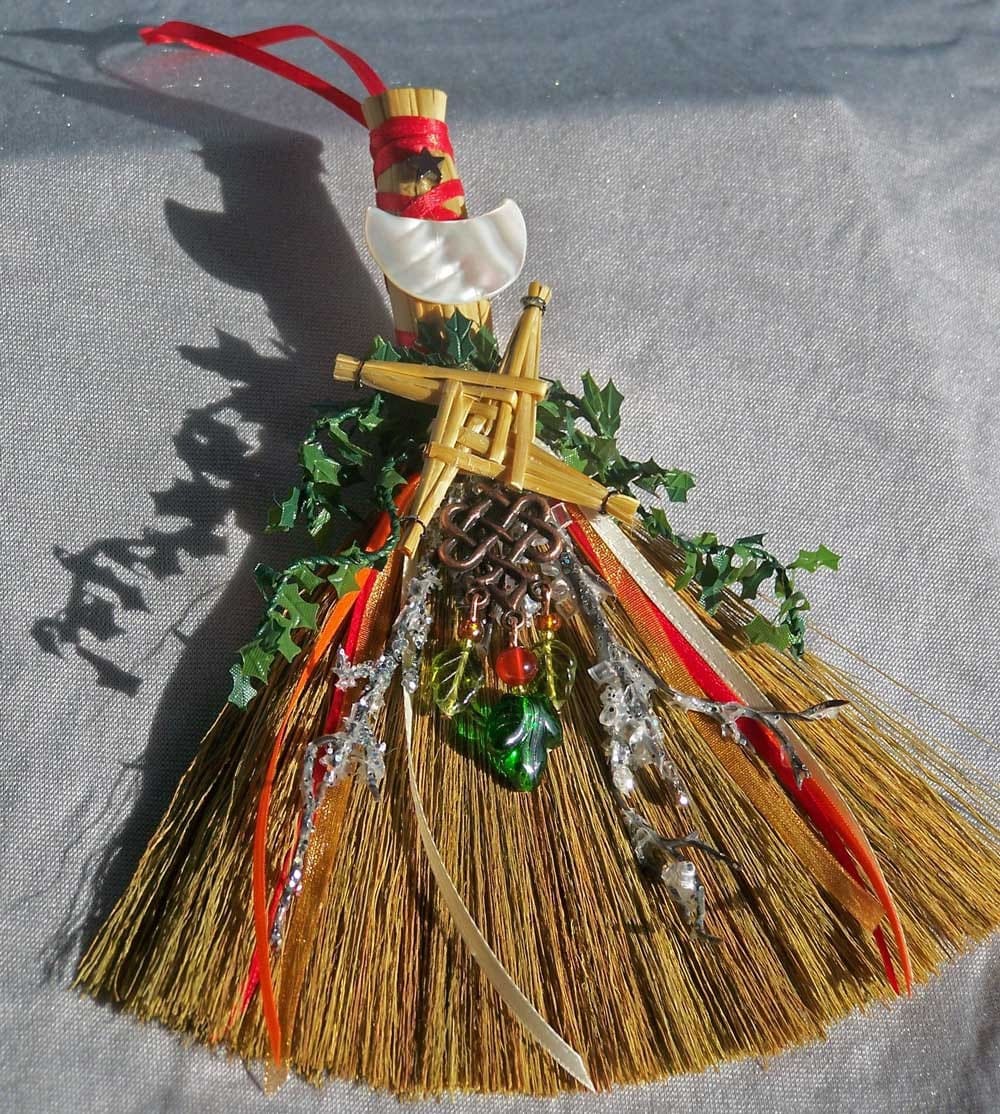
  • Use straw to make a Brigid's Wheel, or a broom, to hang on or above your door to bless your home
  • Make fire starters
  • Make a Brighid's Crown or a Priapic Wand.
  • Go outside and encourage things to grow, perhaps while waving your priapic wand, and/or with a verse like this "Wake, wake, plants in the earth, / spring is a time of light and rebirth. / Hear, hear this magical sound, / and grow, grow, out of the ground."
  • Sweep out your home to cleanse and purify it. 
  • Clean your fireplace/hearth and sweep out the ashes
  • Write or read poems 
  • Since Brigid is the goddess over childbirth, share the birth stories of family members together
  • Candlemas is the day when the Catholic Church blesses their candles for the year. If you use candles in your home (especially if you use them for spiritual purposes) you might consider blessing them.
  • Light candles.
  • Make candles! or Ice candles.
  • Have a candlelit meal with your family
  • If any early flowers have come up where you life, bring some inside.
  • If you grow a garden, this might be a good day to start your seeds indoors.
  • Plant a garden of healing herbs.
  • Help at or donate to a women's shelter, women's health organization, or pregnancy/childbirth support group.
  • (if you have other ideas, please share them in the comments!)
 

Source links: