Merry Meet and Welcome!

Merry Meet and Welcome!

We hope that you will find our content to be uplifting and educational. Please keep in mind that this is not a space for debate or criticism but rather a place for respect, curiosity and learning.

You are encouraged to take what you can from what we share here. If you want to know more, do not look to the contributors of this blog to teach anything beyond what we post. Seek out what feels right for you, trust the Spirit to guide you and have faith in our heavenly parents who are the givers of all pure knowledge.
Showing posts with label Preparing. Show all posts

September 21, 2011

Celebrating Mabon


Background:
Mabon is the second of the three harvest festivals. Lammas celebrates grains, berries, and other early foods. Samhain celebrates the meat harvest of hunting and slaughter time.

Mabon was not an authentic ancient festival either in name or date. The autumn equinox was not celebrated in Celtic countries, while all that is known about Anglo-Saxon customs of that time was that September was known as haleg-monath or 'holy month'. The name Mabon has only been applied to the neopagan festival of the autumn equinox very recently; the term was invented by Aidan Kelly in the 1970s as part of a religious studies project. Previously the festival was simply known as the 'Autumnal Equinox', and many neopagans still refer to it as such.
The name Mabon was chosen to impart a more authentic-sounding "Celtic" feel to the event, since all the other festivals either had names deriving from genuine tradition, or had had names grafted on to them. The use of the name Mabon is much more prevalent in America than Britain, where many neopagans are scornfully dismissive of it as a blatantly inauthentic practice. The Druids call this celebration, Mea'n Fo'mhair, and honor the The Green Man, the God of the Forest, by offering libations to trees. Offerings of ciders, wines, herbs and fertilizer are appropriate at this time. Wiccans celebrate the aging Goddess as she passes from Mother to Crone, and her consort the God as he prepares for death and re-birth.
Various other names for this Lesser Wiccan Sabbat are The Second Harvest Festival, Wine Harvest, Feast of Avalon, Equinozio di Autunno (Strega), Alben Elfed (Caledonii), or Cornucopia. The Teutonic name, Winter Finding, spans a period of time from the Sabbat to Oct. 15th, Winter's Night, which is the Norse New Year. [source link]


Also called Harvest Home, this holiday is a ritual of thanksgiving for the fruits of the Earth and a recognition of the need to share them to secure the blessings of the Goddess and God during the winter months.

This time of year also coincides with Michaelmas (Sep 29), which celebrates the Archangel Michael's victory over the Dragon (the devil). For more on that, visit Ayla's neat posts from last year: part one, part two, and the dragon hunt!


Symbols:
  • red, orange, rust, brown, maroon
  • apples, nuts, squash, gourds, pomegranates
  • pinecones
  • vines (grapes, ivy, etc)
  • corn stalks

Symbolism:
  • Gratitude for the harvest
  • Gratitude for everything else
  • Balance (the balance between light and dark, also between life and death as plants are giving fruit at the same time they are dying. It is appropriate to recognize all forms of balance at this time.)
  • Harmony
  • Self-reliance 
  • Wisdom 
  • Old age (including the transition from "mother" to "crone/wisewoman," or from midlife into old age)(here is a great site about the crone archetype)


Activities:
  • Sing songs of thanksgiving and harvest home (see below)
  • Pick apples
  • Dry apples to make little wrinkly 'faces' and then add corn husk bodies to make little harvest people
  • Write down things you are thankful for on little pieces of paper. Read each one aloud, and put it into the fire to let the smoke carry your gratitude heavenward.
  • Make cider, juice, or wine
  • Make applesauce
  • Gather seeds from dying plants to use for next year 
  • Gather nuts
  • Gather herbs and dry them
  • Make grapevine wreaths (or buy grapevine wreaths and decorate them)

Come, ye thankful people, come, raise the song of harvest home;
All is safely gathered in, ere the winter storms begin.
God our Maker doth provide for our wants to be supplied;
Come to God’s own temple, come, raise the song of harvest home.
 
All the world is God’s own field, fruit unto His praise to yield;
Wheat and tares together sown unto joy or sorrow grown.
First the blade and then the ear, then the full corn shall appear;
Lord of harvest, grant that we wholesome grain and pure may be.

(You can hear the hymn here.)


Food:
  • Have a lavish feast!
  • Apples
  • Apple cider (there is a recipe to make your own here)
  • Apple pie
  • Squash
  • Beans 
  • All vegetables that are in season, including root vegetables like potatoes, carrots, and onions
  • Grapes & wine
  • Nuts and nut breads

Resources:

April 30, 2011

Beltane/May Day

Beltane is traditionally celebrated on April 30 or May 1 (or most traditionally, overnight from April 30-May 1). Some of us may be familiar with pop culture representations of Beltane, which focus on the celebration of the union between the Great Mother and her young Horned God. Their coupling brings fresh new life on Earth. Some form of this Great Rite is enacted on this sabbat in nearly every modern pagan circle. The Great Rite symbolizes the sacred marriage, or sexual union, of the the Lord and Lady [you can read what I wrote about the Great Rite here at MotherWheel]. Often the rite is performed symbolically by a male and female who place a knife (a phallic symbol) into a chalice (a female or yonic symbol). In Old Europe, whole villages would celebrate May Day by slipping away into the woods for indiscriminate sexual encounters. [source]. But Beltane is about more than sex.

Background
Beltane is the last of the three spring fertility festivals, the others being Imbolc and Ostara. It traditionally marked the arrival of summer in ancient times. Beltane, and its counterpart Samhain, divide the year into its two primary seasons, winter (Dark Part) and summer (Light Part). As Samhain is about honoring Death, Beltane, its counter part, is about honoring Life. It is the time when the sun is fully released from his bondage of winter and able to rule over summer and life once again.
Beltane, like Samhain, is a time of "no time" when the veils between the two worlds are at their thinnest. No time is when the two worlds intermingle and unite and the magic abounds! It is the time when the Faeries return from their winter respite, carefree and full of faery mischief and faery delight...When the veils are so thin it is an extremely magical time, it is said that the Queen of the Faeries rides out on her white horse. Roving about on Beltane eve She will try to entice people away to the Faeryland.
Beltane translated means "fire of Bel" or "bright fire" - the "bale-fire". Bel is the known as the bright and shinning one, a Celtic Sun God. Beli is the father, protector, and the husband of the Mother Goddess.
Beltane is the time of the yearly battle between the Welsh God of death and the hero Gwythur for the hand of Creudylad [the beautiful maiden]. A myth of the battle of winter and summer for the magnificent blossoming earth.
The Bel fire is a sacred fire with healing and purifying powers. The fires further celebrate the return of life, fruitfulness to the earth and the burning away of winter. The ashes of the Beltane fires were smudged on faces and scattered in the fields.
Celebration includes frolicking throughout the countryside, maypole dancing, leaping over fires to ensure fertility, circling the fire three times (sun-wise) for good luck in the coming year, athletic tournaments feasting, music, drinking, children collecting the May: gathering flowers. children gathering flowers, hobby horses, May birching and folks go a maying". Flowers, flower wreaths and garlands are typical decorations for this holiday, as well as ribbons and streamers.
[source]


Symbols
  • Sexual symbols, such as the maypole, or the dagger and chalice.
  • The color green
  • "Flowers are a crucial symbol of Beltane, they signal the victory of Summer over Winter and the blossoming of sensuality in all of nature and the bounty it will bring"[source].
  • "Water is another important association of Beltane, water is refreshing and rejuvenating, it is also imperative to life. It is said that if you bathe in the dew gathered before dawn on Beltane morn, your beauty will flourish throughout the year. Those who are sprinkled with May dew are insured of health and happiness. There are other folk customs such as drinking from the well before sunrise on Beltane Morn to insure good health and fortune" [source].

a Green Man cake
Food
  • Bannock, or oat scones (this isn't a traditional Beltane recipe, but it's one we like. Here is a more traditional recipe)
  • Make a Green Man cake (a cake decorated to look like the Green Man)
  • Serve punch or water with ice cubes that have flowers frozen into them
  • Spring salad
  • Sweet breads, usually with sweetmeat or spices in the center
  • Colorful fruit
  • Dairy foods
  • Honey

Activities
leaping the bonfire (source link)
  • Wear bright colors
  • Wear flowers in your hair
  • Have a bonfire! If you're daring, make it a low narrow one (or not!), and jump over it
  • Raise a May Pole, and dance the ribbons around it (here are directions, you can use a branch or a tetherball or volleyball post for your pole)
    winding the ribbons around the may pole
  • Gather flowers, and decorate the house with them
  • Take flowers to your friends and neighbors
  • Gather the first herbs of the season
  • Go on a picnic
  • Wash your face in the dew at sunrise on Mayday (or in the evening dew on Beltane evening)
  • If it rains, go out and get your face and hair wet in it, feeling the blessing of the life-giving water
  • Hold a mock battle between Winter and Summer (they did this in ancient Scandinavia)
  • Make love with your spouse outdoors (in the woods, or in the privacy of your own backyard) (If you didn't follow the link before, check out my post about the Great Rite)
  • Go on a walk in nature. 
  • Look for fairies! 
  • Read fairy stories
  • Decorate your yard with ribbons, flowers and shiny things to attract fairies
  • Build little fairy homes in your yard with rocks, leaves, sticks, ribbons, buttons, etc
  • Say a blessing over your garden (the space or the new starts growing)
  • Read in the scriptures about when God put plants on the Earth
It is the child's unrestrained expression of bliss and delight that is what Beltane is all about. It is the sheer joy of running through fields, picking flowers, rapturing in the sunlight, delighting in the fragrance of spring, dancing in the fresh dew covered grass. Our children guide us through the natural abandonment of our adult sensibilities and show us how to take grand pleasure, warmth and bliss from the gift of Beltane.
[source]

Resources

March 18, 2011

Circle, Coven, Grove: Observing the March Full Moon

Available for sale on Etsy.

The ritual provided in Circle, Coven, Grove for the March Full Moon is to bless the seeds that are going to be planted for the coming growing season. Seeds in this ritual can also be symbolic of the seeds of personal growth. The beginning of spring is a powerful time to plant the seeds for positive change. Just as the March new moon was a time to banish patterns and behavior that hinder positive change, the full moon is a time to bless the habits and behaviors that can grow positive traits.

This year we are lucky that the full moon and the equinox are back to back, so I don't feel the need to choose which blessing is done tonight or that I ought to do both at the same time. As always, my plans are shaped by the developmental needs of my children and their need to be respected at their level as they participate. For this reason, the plan is to bless the seeds for our garden on the night of the full moon and then ask on the night of the equinox for the Lord and Lady's blessing on our efforts to grow as kind, wise individuals.

The author, Deborah Blake, provides the text for the blessings of the seeds that I likely will not adapt very much though I am pondering on whether to associate God the Father will the light of the full moon. The moon is commonly associated with the female aspects of deity so the blessing provided in the book only reference the Lady and her light. I have not yet worked out in my mind the distinctions, separation of the male and female and most often view them as a unit without much understanding of their differences. I am pursuing this topic of study. Any reading materials you can refer me to?

And lastly, you've read about our plans for our garden and that we've been looking forward to planting and starting seeds for a long time now (or so it feels). I'm so excited to be getting closer! If only the seeds I ordered were here already. I thought they would be here be now so I'm just hoping they will be in the mail tomorrow...

March 4, 2011

Circle, Coven Grove: March New Moon

Last month on the New Moon, my husband and I reflected on moving into a new home and what spirit we wanted there. A ritual found in the LDS church is dedicating a home to the Lord. Like the temples are dedicated to be "a house of prayer, a house of fasting, a house of faith, a house of glory and of God, even thy house," we wish to have our home to a house of prayer and faith where the spirit of our Heavenly Parents can be present.

One of the words that we felt very drawn to when it came to dedicating our house was harmony. We want harmony to be a characteristic of our home where the people of our house "should have hearts knit in unity and love", and where our children will, "love one another, and serve one another." (Mosiah 18:21 and Mosiah 4:15).

Often when it comes to encouraging harmony, habits and pre-set patterns need to be overcome and its more of a matter of stopping certain behaviors than starting new behaviors. Due to this and the season of Lent (Mardi Gras is coming up this week), its very fitting that the ritual described in Circle, Coven, Grove would be a Banishing Ritual.

The way the author describes a banishing ritual is as follows:

"Sometimes there are things in our lives-- or in ourselves-- that get in the way of forward movement and our ability to achieve our goals. The new moon is the perfect time to get rid of some of those roadblocks by using a banishing spell.

Banishing spells are fairly simple, really. Instead of asking the gods to help you bring something into your life (prosperity, health, love and so on), you are asking them to help you to get rid of whatever it is that stands in your way. Decrease as opposed to increase, if you will.

The same principles apply, however. If you want to get rid of something (whether it is extra pounds, debt, loneliness, fear, or negative influences in your life), you first have to be specific and focused in your intent, and then you have to follow up with appropriate actions in your everyday life."

An example of a banishing ritual can be found at The Exponent. Kmillecam describes how she used a banishing ritual to the toxic behaviors and and beliefs she learned in her childhood.

Tonight for the New Moon, my family will perform a banishing ritual where each of us can choose something to banish that will help us as individuals and a family move forward and continuing growing in harmony and love. For my husband, it may be that he chooses to banish the lingering effects of pneumonia that had him hospitalized in January. For my son, he may choose to banish the sickness that has periodically been keeping him down this winter. For my mother, it may be to banish the temptations of unhealthy eating and inactivity that perpetuates her health problems. For my daughter, it may be that she banishes her destructive and hurtful reactions to negative situations. Though being under two, that may be what I want for her more than she wants for herself!

To be honest, I'm still thinking of what I will need to banish. I'll need to do that soon! Many things come to mind but I will need to decide on which is most applicable for this time. If anything the opportunity to reflect is going to be an important exercise to me.

Another way to look at the March New Moon is that we near the Equinox, the earth is banishing the long days of winter and is moving toward long days and welcoming in the warm of the sun. In the Pacific Northwest, we are anxiously looking forward to more sun and especially the planting season!

February 11, 2011

Our Feast Table

I really like the idea of acknowledging the elements (especially when it's all FIVE elements: earth, air, water, fire, and Spirit aka Deity). I didn't feel comfortable with invoking guardians or anything like that though. In conversing with my husband however, we settled on an idea that we both really liked.

We have a wooden ring advent wreath in which we burn candles at Christmastime.

We decided to remove the trees (they come out easily) and put in candles in the colors to represent the elements, and then use that as our table centerpiece at our Sabbat feasts.
(White = air, blue = water, green = earth, red = fire, and purple = Spirit)

I also found some silver candles, so I will be using them for our Full Moon feasts (we missed the January full moon because the whole family was sick so we didn't do any feasting...but we're looking forward to it this month!)

You might have also noticed the table runners. I found the full moon fabric and was enchanted, so I went looking and found the aurora borealis fabric as well (which was perfect since we live in Alaska). So I bought them both and made a reversible table runner which will go on our table with the candles on Feast Days.

February 1, 2011

Chinese New Year -Year of the Rabbit


My husband and children are Vietnamese. Chinese New Year, or new year to us, is a great time of celebration in our home.

When I decided to join the other women authoring this blog I didn't know much of anything about the moon, its phases or the Pagan wheel of the year. I felt a bit like I had jumped in the deep end of the pool without my floaties! Since then I have been reading every recommended book I can get my hands on - I must have 5 inter-library loan requests out! I never thought my study of the moon cycles would tie into a holiday we already celebrate.

Before there were calendars there were no 'years' and no 'new year'. The calendar is the longest lasting invention of any culture. The first calendar was lunar. In approximately 2637 B.C. after watching the moon's changing appearance, or phases, the Yellow Emperor Huang di and his scientists developed a "system of cyclical characters." In this system, ten days equaled one week, and three weeks made one month. A day paired a sumbol from the Ten Heavenly Stems with one from the Twelve Earthly Branches. Six repetitions of the Ten Stems and five of the Twelve Branches completed the cyle, a total of sixty days. These cycles were used to name the years during the first century. Later during the 1711 century B.C. the Shang dynasty made a lunar calendar based on months - the time between one new moon to the next. Each month was between twenty-nine and thirty days long.

One legend created in ancient China to help explain the mysteries of the universe tells of Heng-O and the twelve chinese moons. People thought there were twelve moons just as there were twelve months in one year. They also thought there were ten suns, just as there were ten days in the Chinese week. The mother of the twelve moons was also the mother of the ten suns. At the beginning of each month, the mother, Heng-O washed her children in a lake at the far western side of the world. Then each moon made of water, one after the other, traveled in a chariot for a monthlong journey to reach the opposite, east side of the world. There, the suns started their journey.

During the Shang dynasty the perpetual calendar was invented. By measuring the length of shadows during the year with a gnomon -the raised part of a sundial -and the length of each day using a water clock, astronomers were able to note the longest and shortest days of the year revealing two solstices and two equinoxes.
*The Chinese alendar is solar and lunar. It is based on the positions of the sun and the moon.
*The new moon is the first day of a lunar month.
*The chinese New Year falls between Jan 21 and Feb 20, the second new moon after the winter solstice.

Chinese New Year 2011, year of the Rabbit is February 3rd (there is some discussion that due to double months and moons in the Chinese calendar the new year doesn't actually begin until Friday the 4th). So we will have our new year's eve celebrations and our new moon observance all in one week!

Traditions our family has:
*We eat out at our favorite Asian resturaunt
*Each kid gets their own red envelope with as many dollars as they have years.


*Making paper lanterns.
*Fireworks!!


Activities I am adding this year:
*Ancestral Altar - Pictures of deceased relatives nearby. On New Year's Eve, flowers, food and candles are placed on the altar for the ancestors to show respect to them and to unify the family.
*Haircuts for the boys before the new year so as not to cut away good fortune during the year.
*Lantern Festival with friends - begins the first full moon of the Chinese New Year, February 18 (some celebrate the 15th day of the month).
*Door God posters - from the legend of two generals who served the emperor and protected his doorway at night. We will use a Goddess and God symbol. A goblet and an athame most likely on either side of our door.

Happy New Year and Blessed Be!

January 26, 2011

Just some things to keep us on track

My decision and commitment to observe the wheel of the year with celebrations and ritual has helped me complete a project in my que for quite some time.

Would you believe an unschooling family did not have a wall calender in their home? Shocking I know. I kept stalking the dollar store and finally found one I liked. It made it home but never to the wall. Boo. I went to finally put it on the wall and it had disappeared! I remembered that my oldest sister had one from oriental trading co. However after two October birthdays and Christmas I am on a serious budget diet. And what sewer/crafter doesn't look at something like that and think "hey - I can make that!". Psst, stabilizer. (It's your friend and would have been mine had I thought to use it.) But that is a post for another blog.

I am pretty happy with how it turned out and as we put it up last night the kids had so many questions about full moons and waxing vs. waning. I loved answering them all.


It hangs just under our visual Wheel of the Year. My wonderful husband helped me to enlarge and print it out. The kids (5 1/2 and 4) helped me modge podge it to some cardboard. Their involvement in these projects really gets them involved in these celebrations.


We don't have an advent wreath (much as I would love one) and I wasn't planning on spending money on one (remember that diet?). My plan was to simple arrange the candles in their holders into a circle with seasonal decorations in the middle. But (here it comes!) when we went to target for the colored candles they happened to be clearancing a lot of their candles and holders. This one spoke to me. The older two helped me find the right candle colors (right now I can't be picky about the scents and whoo are they gonna clash!) and arrange it on our table. My youngest (15 mos) popped the bubble wrap around the glass holders. East: Blue (for blue skies) South: Red (for fire) West: Green (for green sea waters) North: Yellow (for fields of yellow flowers on the earth) Goddess and God (or Heavenly Mother and Father) candles: White (for spirit and purity)

I love that I can arrange it in a circle or a half helix.


Finally - my very own copy of Circle, Coven and Grove. It came very highly recommended and I am greatful for its ideas and suggestions.

Blessed be.

January 24, 2011

Imbolc, Brigid, and Candlemas

Imbolc is now just over a week away (on February 2), so today's post is to share some background on the Sabbat, as well as give ideas of ways to observe it. (Please note that, as with all sabbats, the celebrations/observations traditionally begin at sundown on the night before, in this case, February 1.)

Background:
The First of February belongs to Brigid, (Brighid, Brigit, Bride,) the Celtic goddess who in later times became revered as a Christian saint. Originally, her festival on February 1 was known as Imbolc (pronounced "IM-bulk" or "EM-bowlk") or also called Oimealg, ("IM-mol'g), two names which refer to the lactation of the ewes, the flow of milk that heralds the return of the life-giving forces of spring. Later, the Catholic Church replaced this festival with Candlemas Day on February 2, which is dedicated to the Virgin Mary and features candlelight processions. The powerful figure of Brigid the Light-Bringer overlights both pagan and Christian celebrations.[source link]
Brigid
Brigid is the goddess not just of fire, but also of hearth and home, smithcraft (blacksmiths, goldsmiths, etc), poetry and creation, healing, women's health, and childbirth. She is an incarnation of the Maiden form of the goddess, and our word "bride" comes from her name.
Imbolc is the time of Blessing of the seeds and consecration of agricultural tools. It marks the center point of the dark half of the year. It is the festival of the Maiden, for from this day to March 21st, it is her season to prepare for growth and renewal. Brighid's snake emerges from the womb of the Earth Mother to test the weather, (the origin of Ground Hog Day), and in many places the first Crocus flowers began to spring forth from the frozen earth. [source link]
Brigid's Wheel aka Brigit's Cross
When Ireland was Christianized, veneration of the Pagan Goddess Brigid was transformed into that of St. Brigit, said to be the human daughter of a Druid... Pagan lore was incorporated into the Christian traditions and legends associated with Her as a saint. She was associated with miracles and fertility. Into the 18th century a women's only shrine was kept to her in Kildare (meaning Church of the Oak) in Ireland. There, nineteen nuns tended Her continually burning sacred flame. An ancient song was sung to Her: "Brigid, excellent woman, sudden flame, may the bright fiery sun take us to the lasting kingdom." [source link]

According to some sources, the Celts celebrated an early version of Groundhog Day on Imbolc too – only with a serpent, singing this poem:
Thig an nathair as an toll
(The serpent will come from the hole)
la donn Bride
(on the brown day of Bride (Brighid)
Ged robh tri traighean dh’an
(though there may be three feet of snow)
Air leachd an lair
(On the surface of the ground.)


Symbolism:
purity, growth, renewal, new beginnings, commitment/dedication, birth, creativity, healing, brides, virgins

Symbols:
white flowers, candles , torches, grains, seeds, acorns, plow, snakes, poetry, blacksmiths/goldsmiths,

Foods:
  • poppyseed cakes or muffins
  • breads, cakes, scones
  • seeds (pumpkin seeds, sunflower seeds, etc)
  • dairy products (milk, cheese, yogurt, etc)

Activities:
Imbolc decoration on etsy
  • On the evening before, each family member leaves one item of clothing outside for Brigid to bless. In the morning the clothing is brought back inside, with Brigid's blessing of healing and protection (see here).
  • Make herbal salves, teas, or other healing things.
  • Make your own butter.
  • Read scriptures about light, the Light of Christ, candles, or fires, as well as the things they stand for (testimony, example, etc)  (Matt 5 is a good place to start)
  • Sing hymns or other songs about light, such as Pass it On.
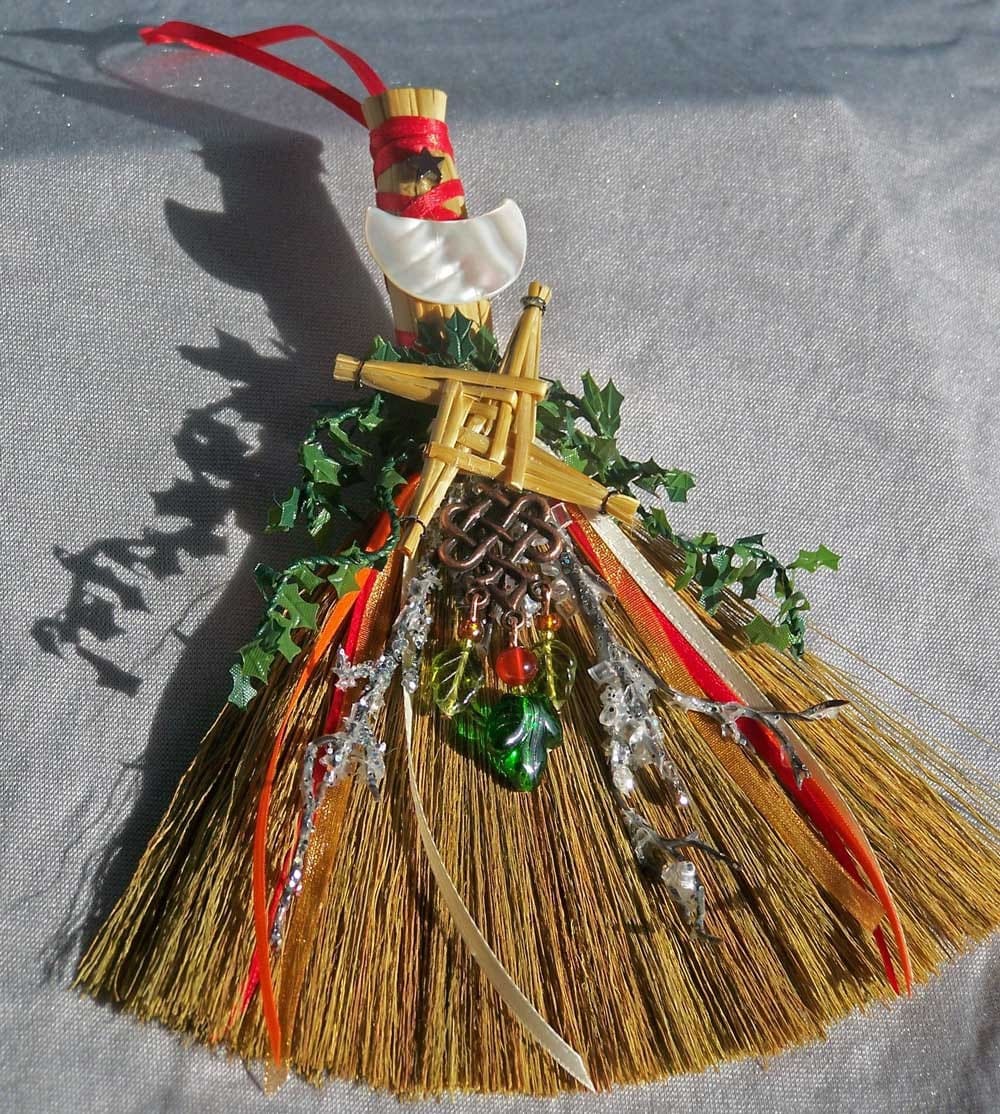
  • Use straw to make a Brigid's Wheel, or a broom, to hang on or above your door to bless your home
  • Make fire starters
  • Make a Brighid's Crown or a Priapic Wand.
  • Go outside and encourage things to grow, perhaps while waving your priapic wand, and/or with a verse like this "Wake, wake, plants in the earth, / spring is a time of light and rebirth. / Hear, hear this magical sound, / and grow, grow, out of the ground."
  • Sweep out your home to cleanse and purify it. 
  • Clean your fireplace/hearth and sweep out the ashes
  • Write or read poems 
  • Since Brigid is the goddess over childbirth, share the birth stories of family members together
  • Candlemas is the day when the Catholic Church blesses their candles for the year. If you use candles in your home (especially if you use them for spiritual purposes) you might consider blessing them.
  • Light candles.
  • Make candles! or Ice candles.
  • Have a candlelit meal with your family
  • If any early flowers have come up where you life, bring some inside.
  • If you grow a garden, this might be a good day to start your seeds indoors.
  • Plant a garden of healing herbs.
  • Help at or donate to a women's shelter, women's health organization, or pregnancy/childbirth support group.
  • (if you have other ideas, please share them in the comments!)
 

Source links:

January 18, 2011

January Full Moon Ritual inspired by Circle, Coven, Grove

In preparation for the full moon tomorrow night, I looked in my copy of Circle, Coven, Grove to get ideas for what my family could do.

The book suggests for the January Full Moon to perform a group dedication ritual. Its a fitting idea for my family to in a formal way dedicate our family to our observance and celebration of the Wheel of the Year. I expect that I will follow the ritual described in the book in a loose fashion, reword it to reflect our beliefs and values and simplify it for the young minds in my household. I'll post afterwards so we can see what we did!

The ritual will basically be a statement of intent that we as a family plan to observe the Wheel of the Year and give thanks for the cycles of life as we seek to find spiritual learning and joy from our shared experience. I guess I've got tomorrow to plan and assemble materials!

Jenni here on Mother Wheel as a rule prepares a feast for the Full Moon celebrating the fullness and richness of the earth's bounty. Depending on how on it I am, I like the idea of incorporating this idea as well.

The book Circle, Coven, Grove is designed to be used starting January and going through the year which is how we happen to be using it. If someone were to start their Wheel of the Year observance in another time of year, it makes sense to me to perform the group dedication early in their observance rather than waiting for January to come around to do it.

January 4, 2011

Teaching the Phases of the Moon

For Family Home Evening this week, I decided it would be time to introduce the concept of the New Moon to my 3 year old. He is already familiar with the Full Moon as well as the crescent moon(s). But tonight would be the first time I called his attention to the seeming absence of the moon in the sky.

The night of the New Moon (Jan 4th), we'll take a trip outside to observe this natural phenomenon and in preparation for it, I wanted to teach a some intro. A visual would be necessary and given the difficulty of modeling it with balls and flashlights (which we've done before) I turned to something a little easier (for the parents at least, and I hope it was as effective as, if not more, for learning from a child's perspective).

What did I turn to? Youtube, of course!

A search for "Phases of the Moon" will pull up some fun, interesting, and easy to understand results.

Like, this one from the History Channel.


This one provides a good one for parents to stop and talk about what is being seen in a way that in understandable to the age and cognitive ability of children without worrying about a soundtrack to get in the way:


And for a little more in depth conversation and discussion:


And this one is just a bit of fun. Please don't get too frustrated with the egregious mispronunciation of Waning.


Another resource for teaching the phases of the moon would be in books. Papa, Please Get the Moon For Me by Eric Carle is our favorite at home and one that taught Chunka (my three year old) to recognize when the moon "is little" (a crescent) and small enough to pull down from the sky.

To bring language development and kinetic learning in (and this was Chunka's idea, not mine), we talked about the ASL signs for moon. (Search Main Dictionary, In "M" scroll for moon which also includes videos for crescent moon and full moon).

Those are my ideas for a short, engaging and developmentally appropriate lesson on teaching the mechanics of the phases of the moon. What else would you add? I'm particularly interested in books. What books do you know of that illustrates how the moon changes throughout the month?

Next will be teaching and sharing the spiritual, biological, cultural and historical significance of the changing phases of the moon. One step at a time...

Though, that does give a good lesson plan for the next few months.

So please, what resources can you think of to teach these concepts to young children? Please respond in the comments or by writing a post of your own!

December 30, 2010

Preparing for the January New Moon

The beginning of the new year is a time of beginnings and so it is for our blog. Coinciding with the public debut of Mother Wheel, is also the January New Moon. Just in time for New Years and Mother Wheel going public, the moon is starting to reappear in the sky for us.

It just seems fitting that our new endeavor would be linking to a lunar observance. Though the Wheel of the Year that we are following has different "New Years" based on the tradition, it is perfectly legitimate to observe January 1 as the beginning of our New Year. 

If we think back, we remember that our last full moon was just before the Solstice and also coincided with a lunar eclipse. The moon continued to wane until the new moon which will come on the night of January 3rd for us (as we are all USians).

To observe the beginning of a new moon and in order to celebrate our new beginning as a virtual coven here on Mother Wheel, I find that the ritual (observance) from Circle, Coven and Grove is very fitting.

The author offers up a ritual of establishing a pagan practice (tradition) either individually or as a family or communal group. She suggests that the January New Moon is a good time to begin a Book of Shadows.

A Book of Shadows is the name given to a book where a witch or group of witches records their rituals, recipes or anything else In a way this blog Mother Wheel is our Book of Shadows for the year. This is where we will plan, prepare and share what we do as individuals and families to connect with the cycles of the earth and celebrate nature.

At the New Moon, this may be a good time for introducing the blog to our families and showing them what it is that we will be doing. We could use it as a time to introduce our fellow bloggers and talk about them as families and friends who are sharing this special endeavor with us. We can join together across the country and think of each other and ask in prayer to for each participant to be blessed with knowledge and gratitude for nature and all that it provides to us.

For my young children (3 1/2 and 1 1/2 yrs old), just this and a trip outside to observe the absence of the moon in the sky, may be all their attention spans can handle. It won't need to be elaborate or drawn out, but the lesson will be there that we value the earth upon which we live, community, and seeking knowledge. Its also somewhat fitting that this also is Monday night, the evening Mormons traditionally set aside for Family Home Evening.

Descent's Wheel of the Year Guidebook

As a guide for my family as we start this endeavor to observe the natural cycles of the year, we are using the book "Circle, Coven, and Grove: A Year of Magickal Practice" by Deborah Blake. Its offers a ready-made ritual for each seasonal observance of every month of the year. The reader can use it to get ideas and can be adapted to meet their circumstances, needs and practice style.

I have been enjoying the flexibility but also the basic guidance so I can learn the basics of ritual and make it work for my comfort level and what would be developmentally appropriate for my children. I consider it a starting point and then from there I can take what inspiration I can glean from it and then develop something that I'm happy to do.

In fact, I based my winter solstice observance off of the ritual shared in the book though what I did was very different than the book, but like I said, I was glad for the guidance it gave me as it stimulated ideas.

The book is organized by month and each chapter covers a little bit about the season relating to that month and background into any of the 8 sabbats that might be occuring in that month. After the introduction and description of that month, rituals are provided for the New Moon in that month, the Full Moon as well as Sabbat. Often in months where there is a Sabbat, ideas for a celebration and gathering are given in addition to the ritual.

I recognized that I needed a crutch to help me as I committed to learning about the Wheel of the Year and each seasonal celebration. I had been wanting to do this for a couple of years but always was thwarted in my intention because of losing track of the times of the year and not having enough time to prepare, or missing it all together. This year, I'm being more intentional about it and recognizing that I likely will not have a great deal of time to learn and prepare something from scratch.

If you follow my posts throughout the year, you'll see what sorts of ideas I generate from using this book as my guide. Though I will warn you that many of our observances may bear little resemblance to what is contained in it. And other times, you may find that I completely steal from it, perhaps because I ran out of time to prepare anything more personally suited to me, or because I find that what was written was already perfectly suited to me and my family.

December 27, 2010

Self Blessing

This ritual is adapted from the Self Blessing ritual found in Appendix II of Drawing Down the Moon by Margot Adler. The book states that it was written by Ed Fitch in the late 1960s, and designated to be an introductory ritual for those who are searching and investigating the Pagan path.

This ritual might be performed during the new moon, or at any other time that the practitioner feels a need for it. The book says that "there is real power in the Self Blessing; it should not be used other than in time of need and should not be done promiscuously. The purpose of this ritual is to bring the individual into closer contact with the Godhead. It can also be used as a minor dedication [of oneself]. This self blessing ritual may also be used [to] banish any evil [or negative] influences which may have formed around the person.
"The result of the ritual is a feeling of peace and calm. It is desirable that the participant bask in the afterglow so that he may meditate and understand that he has called the attention of the Godhead to himself, asking to grow closer to the Godhead in both goals and in wisdom."

The ritual should be done in a quiet place, without distractions. The book recommends doing it nude, but this seems optional. I think this could also be done between spouses, or parent-to-child.

You will need the following:
  • Salt, about one quarter teaspoon
  • Wine, about an ounce, mixed into water, about one-half ounce (you might substitute this with water, olive oil, or water with some essential oil in it)
  • Candle, votive or other
Sprinkle the salt on the floor and stand on it, lighting the candle. Let the warmth of the candle be absorbed into the body. Mix the water into the wine (or whichever anointing liquid you are using) while meditating upon your reasons for performing the self blessing.
Read the following aloud (or adapt it for your personal preferences):

Bless me, Father/Mother, for I am your child.
(Dip your fingers into the liquid and anoint the eyes)
Blessed be my eyes, that I may see your path.
(Anoint the nose)
Blessed be my nose, that I may breathe your essence.
(Anoint the mouth)
Blessed be my mouth that I may speak of you.
(Anoint the breast)
Blessed be my breast, that I may be faithful in my work.
(Anoint the loins)
Blessed be my loins, which bring forth the life of men and women as you have brought forth all creation.
(Anoint the feet)
Blessed be my feet, that I may walk in your ways.

Remain, and meditate for a while.